The short version
- A coalition of more than 50 companies is urging the EU to accelerate electric truck adoption before its 2027 heavy-duty CO2 review.
- WSP estimates a faster transition could add about €9 billion in annual EU economic value by 2035 compared with a slower, more import-dependent shift.
- Negotiations on revised EU truck weight rules have been postponed until the end of November at the earliest.
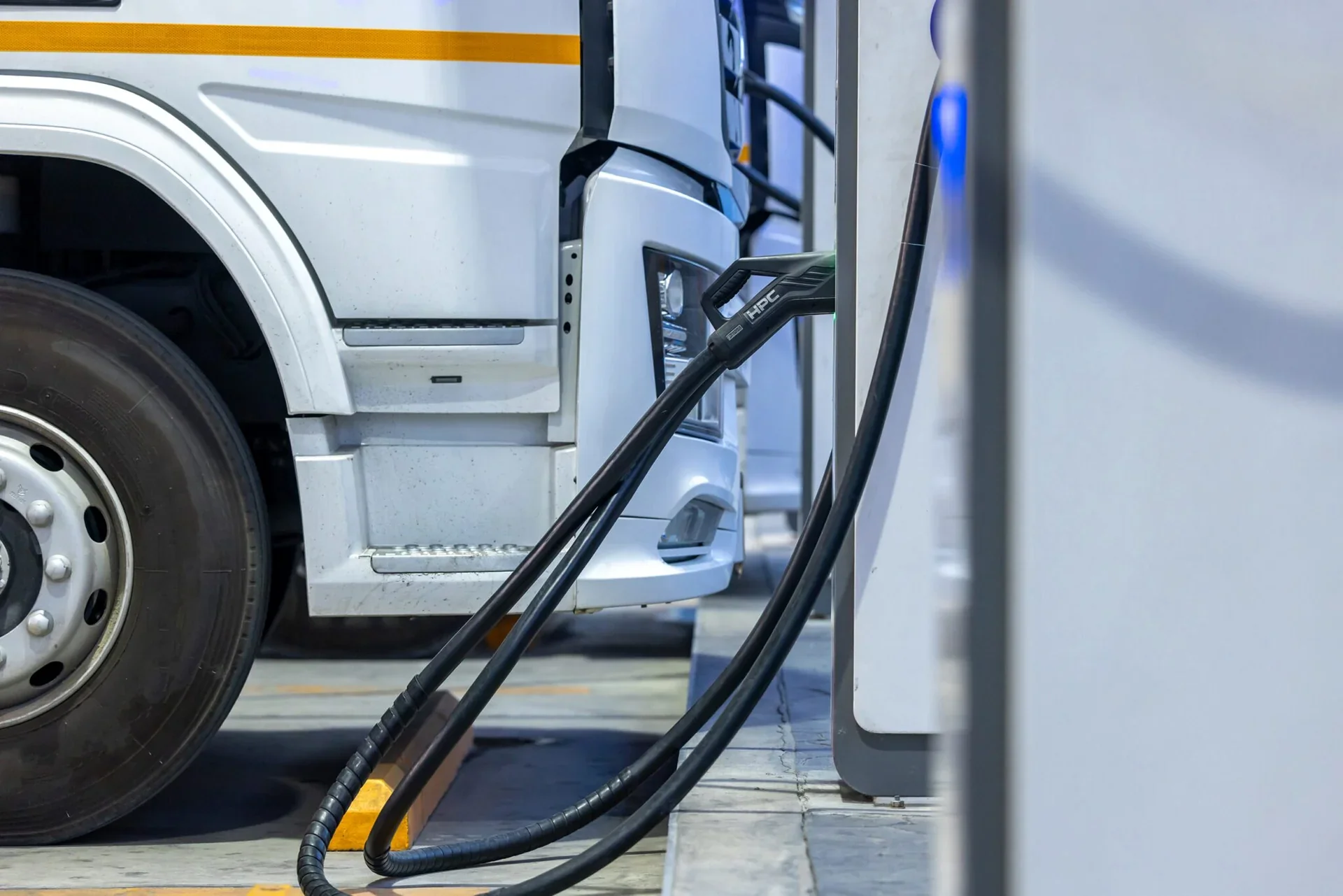
A coalition of more than 50 companies is urging the European Union to accelerate electric truck adoption ahead of its 2027 review of heavy-duty CO2 standards. It wants measures to narrow the total cost-of-ownership gap between electric and internal-combustion trucks, faster grid connections and support for high-power charging investment.
The coalition includes truckmakers, charging providers, utilities, battery manufacturers and fleet operators. Members named include Traton, Amazon and charging network Milence.
Consultancy WSP estimates that a faster transition could generate about €9 billion more in annual EU economic value by 2035 than a slower, more import-dependent shift. The estimate includes 24% more value added in electric truck manufacturing, worth about €2.5 billion.
Regulation (EU) 2024/1610 requires new heavy-duty vehicles to cut tailpipe CO2 emissions by 45% by 2030, 65% by 2035 and 90% by 2040. Truckmakers face fines of €4,250 per gram of CO2 per tonne-kilometer for missing the targets.
Truckmakers including Volvo, Daimler and Traton have also pressed for binding annual checks on member states’ progress on charging, grid capacity and purchase incentives. They want penalties paused or reduced when countries miss infrastructure targets, and zero- and low-emission vehicle credits extended beyond 2030.
Payload rules remain unresolved. Trilogue negotiations on the revised Weights and Dimensions Directive, due Nov. 10, have been postponed until the end of the month at the earliest. The European Commission has proposed extra weight allowances for zero-emission trucks; the Council wants different allowances for five- and six-axle combinations.
Truckmakers have warned that higher gross weight would not help common 4x2 tractors if drive-axle limits stay unchanged. The European Automobile Manufacturers’ Association says electric trucks could carry less freight than comparable internal-combustion trucks.
Fleet operators, many with profit margins of 1% to 3%, are seeking depot-charging support, toll discounts for zero-emission trucks and recognition of renewable fuels such as HVO in the CO2 framework. Transport & Environment opposes HVO recognition, arguing it would prolong the use of internal-combustion trucks.
Sources & editorial note
Compiled and edited by the Tach Wire editorial desk from open public sources listed below, checked against each source for accuracy. Photo: Photo: Automotive World.
- 01Automotive WorldCoalition presses EU to speed up e-truck adoption
0 comments
Comments stay in this browser. They are not sent to the newsroom.