The short version
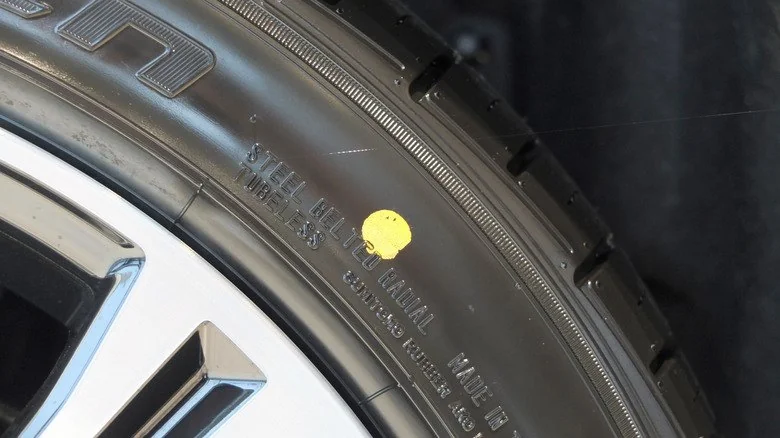
- The yellow dot marks a tire's lightest point and is generally aligned with the wheel's valve stem.
- The red dot marks the tire's peak radial force variation under load.
- Matching the marks correctly can reduce balancing checks, added weights and vibration.
Colored dots on new tires help installers position the tire on the wheel. The yellow dot marks the tire's lightest point, while the red dot identifies its maximum radial force variation when loaded.
Tires can differ slightly in density around their circumference. Installers generally align the yellow dot with the valve stem because the valve is usually the wheel's heaviest point. That pairing can mean fewer balancing checks and weights.
The red mark relates to the tire's behavior as it rotates under load. It identifies the peak of radial force variation, which can produce vibration if it is not matched with the wheel's point of minimum radial runout. That wheel reference may be shown by a notch or colored mark.
A wheel balancer can correct the assembly with weights, but a wheel-and-tire shop manager cited by Carscoops said the red mark can be more consequential than the yellow one because a mismatch may create greater vibration and discomfort in the cabin.
How this story was made
Written by the Tach Wire desk from the reporting below, checked against each source and for overlap with their text. Photos: Carscoops.
0 comments
Comments stay in this browser. They are not sent to the newsroom.