The short version
- GM completed roughly 80% of the 2027 Silverado 1500's passive safety engineering in simulation.
- The development process included about 92,000 virtual crash tests and nearly 2 petabytes of data.
- Multiple physical crashes remain part of the process to verify the simulations and refine GM's models.
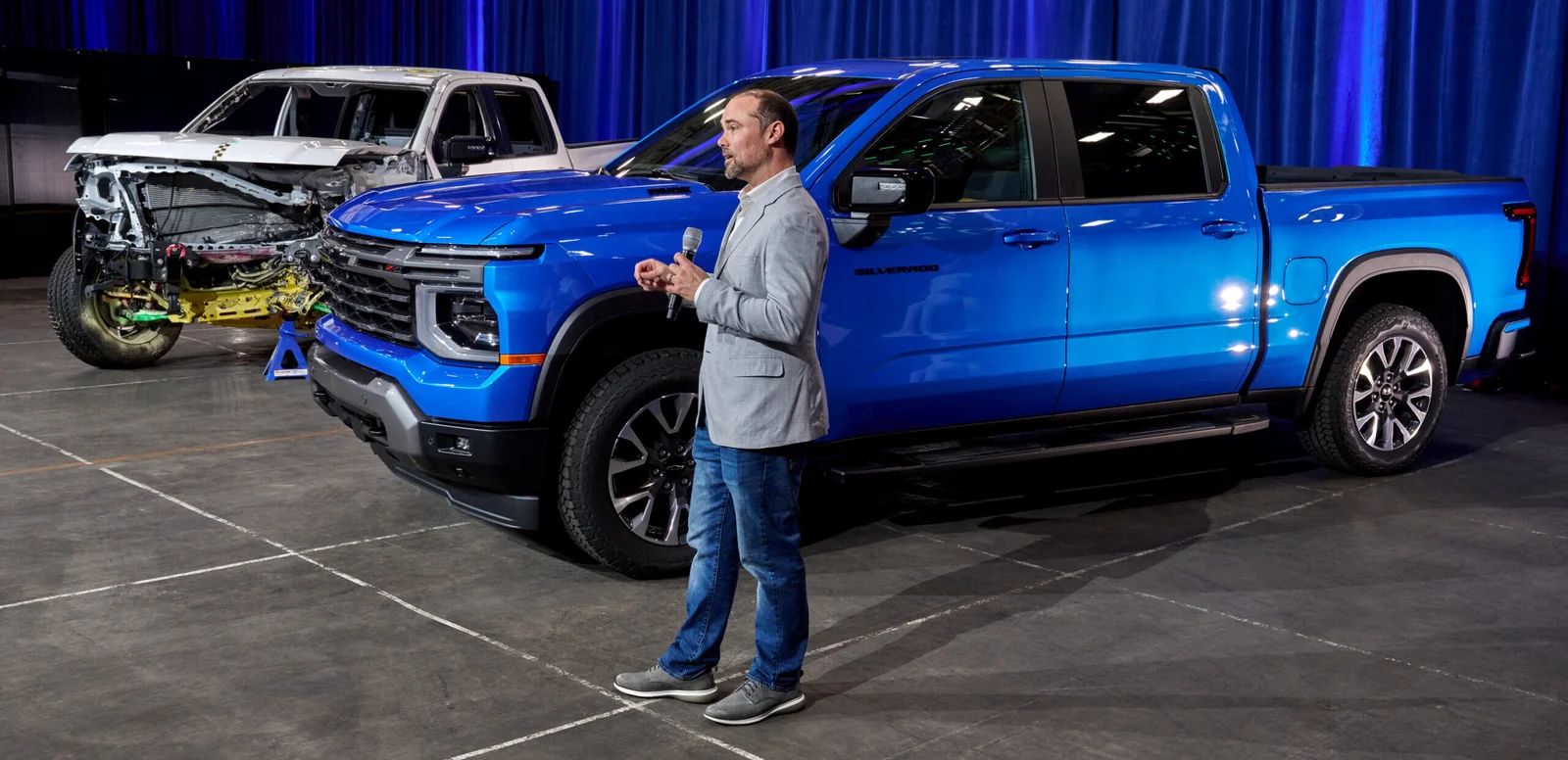
General Motors completed roughly 80% of the 2027 Chevrolet Silverado 1500's passive safety engineering in simulation, using about 92,000 virtual crash tests during development. The work produced almost 2 petabytes of data.
Engineers modeled hundreds of structural and restraint-system variations for a single 40% frontal-overlap crash at 40 mph (64 km/h). They changed details such as material thickness and component joining methods to study their effects on crash performance.
GM is using artificial intelligence to process the results and debug simulation models, while physical crashes continue to confirm the virtual findings. The company says the broader simulation workload supports its goal of cutting vehicle development times in half.
Sources & editorial note
Compiled and edited by the Tach Wire editorial desk from open public sources listed below, checked against each source for accuracy. Photo: Automotive World.
- 01Automotive WorldChevrolet Silverado safety work moves 80% into simulation
0 comments
Comments stay in this browser. They are not sent to the newsroom.