The short version
- Mercedes-Benz says it will stop investing in passenger-car manufacturing in Germany.
- The company is considering possible plant closures and production shifts to Hungary.
- Mercedes is negotiating with IG Metall and the Mercedes General Works Council.
Mercedes-Benz will stop investing in passenger-car manufacturing in Germany, citing factory costs, and is weighing possible plant closures. The company may shift production to Hungary.
Production chief Michael Schiebe said in an internal interview that current cost structures do not allow investment in Germany, according to the Financial Times. Mercedes is negotiating with IG Metall and the Mercedes General Works Council; the unions have said they will oppose any closures.
Mercedes has asked German plant employees to work 40 hours a week without additional pay, five hours above the standard cited for Germany's auto sector. The company argues its labor costs are too high compared with plants in Eastern Europe and the United States.
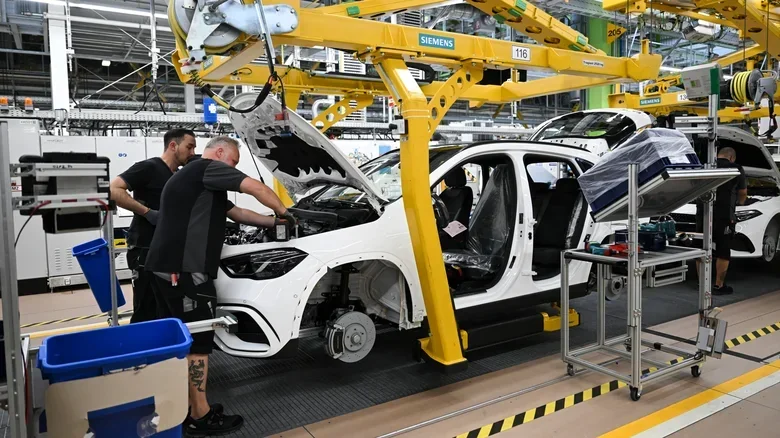
Mercedes operates three passenger-car assembly plants in Germany: Sindelfingen, with 31,500 employees; Bremen, with 10,500; and Rastatt, with 7,000. Earlier comments from Schiebe indicated that two German plants could be at risk, though the source did not name them.
The automaker's Hungarian plant in Kecskemét employs 5,000 people and builds combustion-engine, plug-in hybrid and electric passenger vehicles. The current-generation GLB, A-Class and electric C-Class are among the models produced there.
Mercedes expects returns of 2% to 3% this year, compared with its earlier double-digit projections. Passenger-car sales in China, its largest market, fell 31% in the third quarter.
How this story was made
Written by the Tach Wire desk from the reporting below, checked against each source and for overlap with their text. Photos: Carscoops.
0 comments
Comments stay in this browser. They are not sent to the newsroom.