The short version
- A barrier that blocks the highway from view can reduce noise by 5 decibels, according to the Federal Highway Administration.
- The agency says barriers can reduce perceived noise at homes and apartments within 200 feet of a road.
- The US had 2,748 miles of highway noise barriers in 2010, at an estimated cost of $5.44 billion in 2010 dollars.
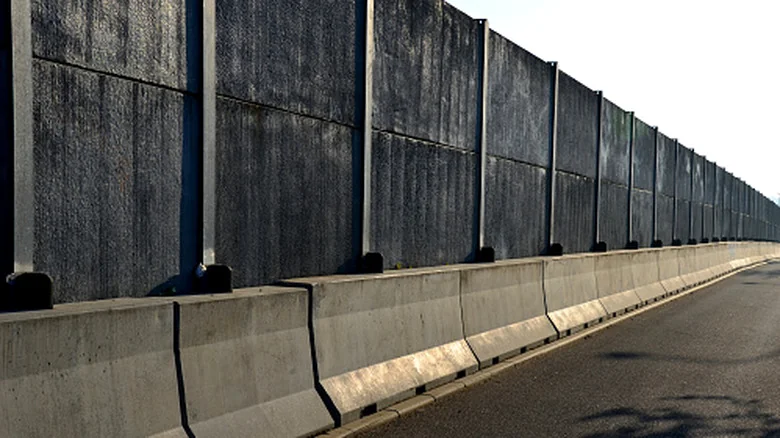
Highway noise barriers can reduce sound reaching nearby homes, and the Federal Highway Administration says a wall that rises to the line of sight — blocking the view of the highway from the area it shields — is enough for a 5 dB noise reduction. Each additional meter of height reduces loudness by another 1.5 decibels, according to the agency.
The barriers are meant for stretches where roads run close to populated areas. The agency says they can reduce perceived noise at houses and apartments within 200 feet of a highway.
Concrete is common, but barriers can also use earth, wood, metal or glass. The material needs to be dense and solid enough to block sound; earth is the most effective option, but takes the most space and material.
Barriers generally should stay below 25 feet, the agency says, because taller walls bring structural challenges and higher material costs. They can also keep wildlife from crossing roads, block flying debris and screen traffic from view.
A separate Federal Highway Administration study counted 2,748 miles of highway noise barriers in the US in 2010, with an estimated cost of $5.44 billion in 2010 dollars. That figure equals $10.88 billion in 2026 dollars.
Sources & editorial note
Compiled and edited by the Tach Wire editorial desk from open public sources listed below, checked against each source for accuracy. Photos: Carscoops.
0 comments
Comments stay in this browser. They are not sent to the newsroom.