The short version
- Tesla is taking orders for the $29,990 Cybercab ahead of expected December deliveries in Austin.
- The Cybercab has a NACS port but no onboard charger, so it cannot use a Wall Connector, household outlet or Level 2 station.
- Tesla has shown a wireless charging pad but has not announced its price or launch date.
Tesla is taking orders for the $29,990 Cybercab ahead of expected December deliveries in Austin, but buyers cannot charge the car at home with Tesla’s existing equipment. The two-seat vehicle only accepts DC fast charging because it has no onboard charger.
The Cybercab does have a NACS port behind a panel in the rear bumper. Tesla confirmed at its September Austin launch event that the car lacks the hardware that converts AC electricity from a wall or Level 2 station into battery-ready DC power.
That rules out Tesla’s Wall Connector, the Mobile Connector on a 120-volt outlet and standard Level 2 public stations. Owners must use a DC fast charger, including a Supercharger.
Tesla’s autonomy agreement also requires a $299 monthly subscription for the car to move. That subscription agreement puts charging responsibility on the buyer, stating the owner is responsible for charging among other costs. Separately, the Cybercab Order Agreement limits the car to NACS DC fast charging, Superchargers included, and says only the registered owner can use the Cybercab while physically present for the entire trip. The subscription agreement allows the car to travel empty to a Tesla service center when service is due, but includes no similar provision for charging.
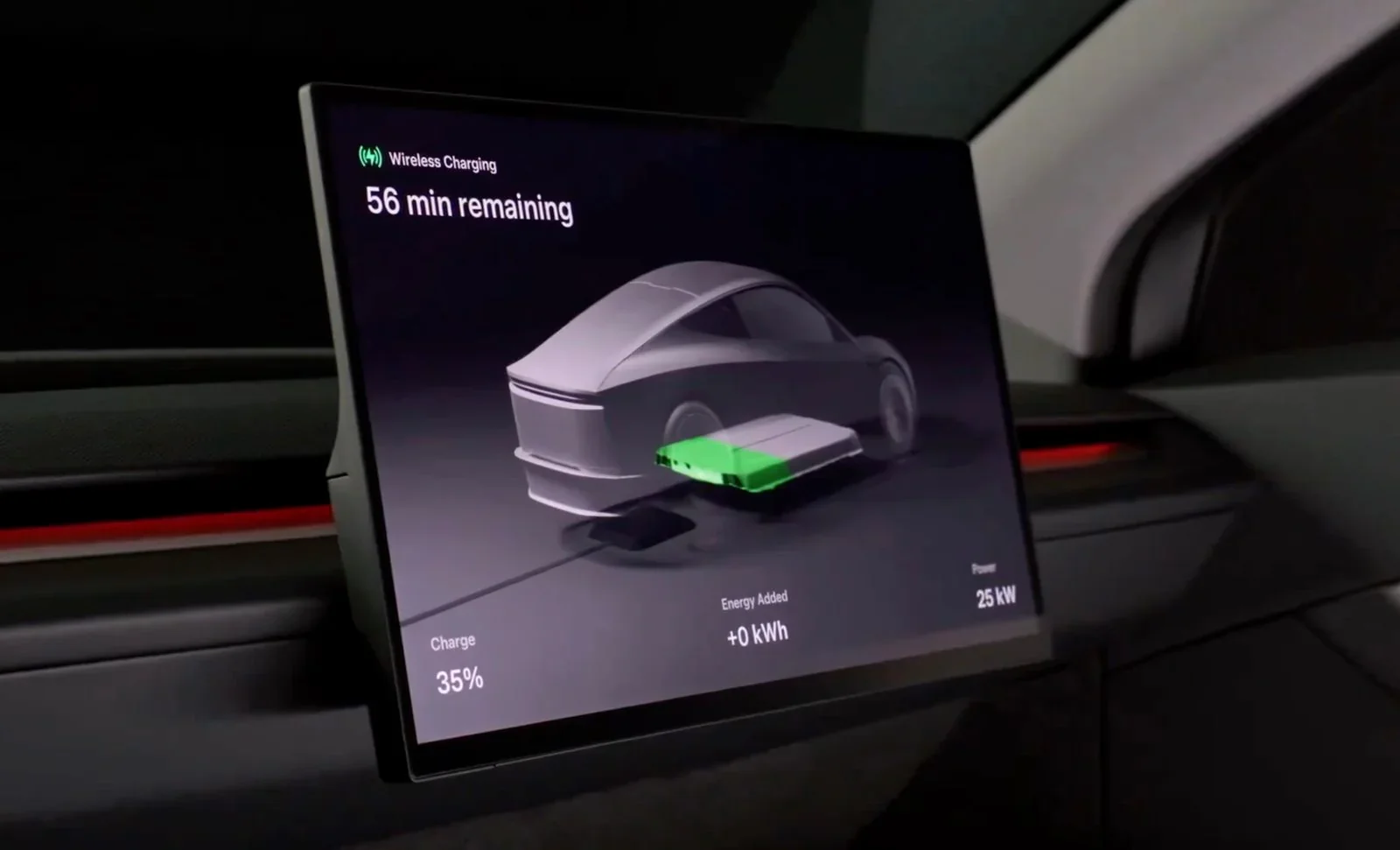
Tesla has been developing a wireless home charger since at least March 2023. The company later showed the Cybercab charging over a pad at 25 kilowatts and said its efficiency was above 90%. In February, the FCC granted Tesla a waiver for ultra-wideband radios intended to guide the vehicle onto the pad.
Tesla has not sold the pad, announced a price or provided a launch date. The company also abandoned wireless charging for the Cybertruck last year, despite shipping that truck with related connectors.
Tesla’s Austin charging plans center on a depot on St. Elmo Road, with 48 V4 Supercharger stalls in the first phase and equipment for 80 wireless chargers in a later phase. Private owners could potentially use the site, but the owner-presence requirement would still leave them waiting with the car during charging.
Home DC charging is another possible route, but current options are limited. Sigenergy’s 25-kilowatt bidirectional unit is designed for its SigenStor home battery system, while Lunar Energy’s 25-kilowatt home DC charger is not expected until mid-2027.
Sources & editorial note
Compiled and edited by the Tach Wire editorial desk from open public sources listed below, checked against each source for accuracy. Photo: Photo: Electrek.
0 comments
Comments stay in this browser. They are not sent to the newsroom.