The short version
- Fleet trackers have logged FSD v15.0.1 only on US Model Ys with AI4 hardware so far.
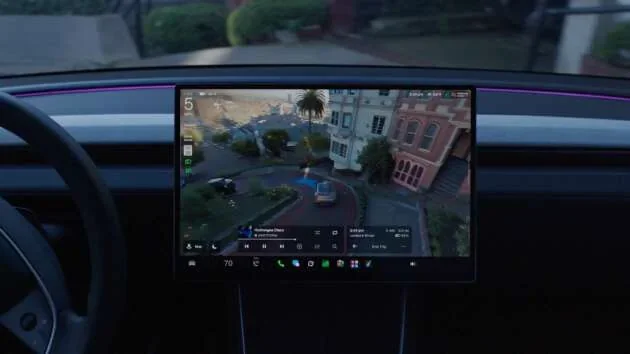
- Reality View shows planned turns and parking locations, with tap-to-select destination controls.
- Drivers can override speed-camera slowdowns; two overrides at the same camera save that preference.
Tesla has begun rolling out FSD (Supervised) v15.0.1 in the US, adding an AI-generated surroundings display, speed-camera slowdowns and a mode for driving with a bike rack attached. CEO Elon Musk said a wider release will arrive in December with Tesla’s annual Holiday Update.
Fleet trackers Teslascope and TeslaFi have recorded the update only on US Model Ys equipped with AI4, also called HW4, hardware. It is the first major FSD version since v14 arrived in October 2025.
Tesla Reality View replaces the earlier computer-graphics visualization with generated video from a virtual viewpoint above the car. Arrows indicate intended turns, and pins mark planned parking spots. Musk said drivers can tap the display to select a precise parking space or drop-off location.
Teslarati reported noticeable display lag during its first drives. Musk acknowledged the latency and said Tesla has identified changes that could reduce it by roughly 35%.
Speed-camera recognition lets FSD slow the car when it detects a camera. Pressing the accelerator or selecting a higher speed profile overrides that response. After two overrides at the same camera, the system remembers the location and stops slowing there.
Bike Rack Mode allows FSD to operate with a bike rack or similar hitch accessory attached. In that mode, the car pulls over near its destination and does not reverse. Autopark, Summon and reversing sounds and warnings are disabled.
Parking choices now draw on the driver’s parking history, and the map offers multiple options at the destination. Tesla also lists improved detection of small animals, debris, chains and potholes, along with broader cabin-camera support for drivers wearing hats or sunglasses.
Tesla claims a 25-fold improvement in its critical-intervention rate, crediting a new vision encoder shared with its Robotaxi service and Optimus robot. The company has not defined a critical intervention or identified the baseline for that figure.
Separately, Tesla’s October safety report recorded 6,006,200 miles per major collision with FSD engaged, compared with 660,164 miles for the average US driver and 2,031,221 miles for manually driven Teslas with active safety features enabled. Those company-supplied figures have not been independently audited. The report counts a crash against FSD if it was active within five seconds before impact.
FSD remains a supervised driver-assistance system. Drivers must keep watching the road throughout its operation.
Sources & editorial note
Compiled and edited by the Tach Wire editorial desk from open public sources listed below, checked against each source for accuracy. Photo: Photo: Paul Tan.
0 comments
Comments stay in this browser. They are not sent to the newsroom.