The short version
- Modern 12-volt batteries have plastic cases that prevent the old concrete-floor problem.
- Batteries naturally lose charge over time, and heat can speed up that discharge.
- Sulfuric acid from a spilled flooded battery can damage concrete; baking soda and water can help clean it up.
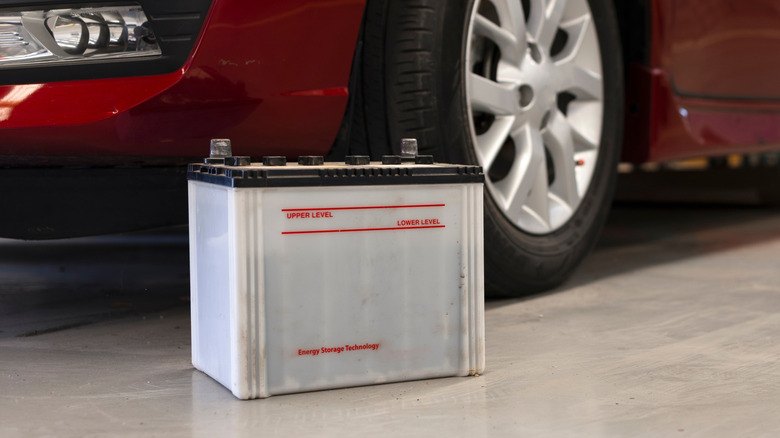
Leaving a modern 12-volt car battery on a concrete garage floor will not damage it or make it discharge faster. Most use tough, injection-molded plastic cases, unlike older batteries that could crack and leak.
The myth has a historical basis. Early six-volt batteries often used wooden boxes and glass acid containers. Battery makers later moved to hard-rubber cases, but heat and vibration could still cause cracks and splits. Batteries placed on the ground could then discharge.
Modern batteries will still lose charge naturally, regardless of what they sit on. Storage temperature affects the rate: a battery in a cold area holds its charge longer than one kept in a hot space.
The bigger concrete hazard runs in the opposite direction. Many flooded wet-cell batteries contain sulfuric acid, which reacts with the alkaline calcium compounds in concrete. A spill can leave pitting, stains, small craters and a chalky surface. AGM batteries are effectively spill-proof, but not every car battery uses that design.
Treat a spill promptly with an alkaline paste made from water and baking soda, then scrub gently and rinse with water. Water alone can spread the acid, and protective equipment should be used.
How this story was made
Written by the Tach Wire desk from the reporting below, checked against each source and for overlap with their text. Photos: Carscoops.
0 comments
Comments stay in this browser. They are not sent to the newsroom.