The short version
- Directional tires cannot be swapped side to side as complete wheel-and-tire assemblies without reversing their rolling direction.
- A square setup allows front-to-rear rotation while keeping each tire on the same side.
- Staggered setups require all four tires to be remounted on the opposite side of the same axle.
Directional tires can move from one side of a car to the other, but the job requires more than unbolting the wheels. Each tire must be removed from its wheel, remounted so it rolls in the correct direction and balanced again.
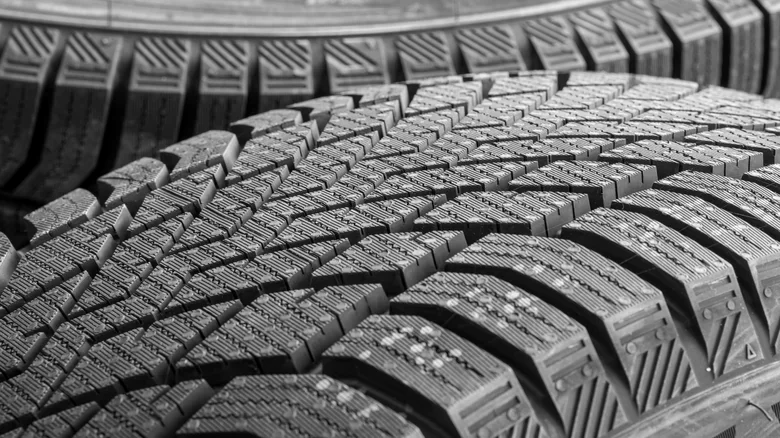
Swapping complete wheel-and-tire assemblies directly across the car leaves the tread running backward. Directional tires commonly use V-shaped channels to move water away from the contact patch, and incorrect rotation can reduce wet-road grip and braking performance.
An arrow on the sidewall shows the intended rolling direction. When the tire is installed, the arrow should point forward when it reaches the top of the wheel.
Cars with a square fitment, meaning all four wheels and tires are the same size, can usually rotate tires between the front and rear axles while keeping each tire on its original side. That avoids remounting, although the tires may wear less evenly and more quickly.
A staggered setup, with larger wheels or tires at one end, cannot use that front-to-rear method. Rotating those tires requires dismounting all four, remounting them on the opposite side of the same axle and balancing them again.
How this story was made
Written by the Tach Wire desk from the reporting below, checked against each source and for overlap with their text. Photos: Carscoops.
0 comments
Comments stay in this browser. They are not sent to the newsroom.