The short version
- A dirty MAF sensor can contribute to rough running, hesitation and reduced fuel economy.
- Use dedicated sensor cleaner in 10 to 15 short bursts, then let the sensor dry for about 10 minutes.
- Some newer turbocharged and supercharged vehicles use a MAP sensor instead of a MAF sensor.
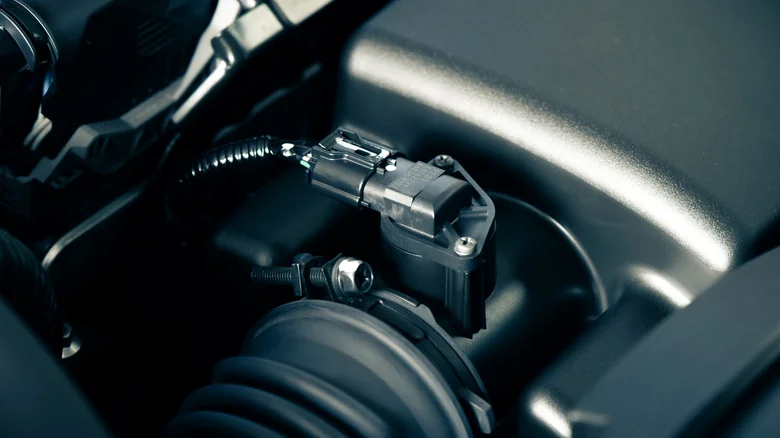
A dirty mass airflow sensor can contribute to rough running, hesitation during acceleration and reduced fuel economy. The sensor measures air entering the engine and sends that information to the ECU, which adjusts fuel delivery.
The MAF sensor is typically in the air intake between the filter and throttle body. A poor or degraded air filter can let dirt and debris into the intake, where particles may collect on the sensor.
To clean it, unplug the connector and remove the screws, Torx fasteners or small bolts holding the sensor. Spray a dedicated, residue-free MAF cleaner onto the sensing elements in 10 to 15 short bursts, then leave the sensor in a safe place to dry for about 10 minutes.
After it dries, reinstall the sensor with its original hardware and reconnect the plug. If cleaning does not resolve the problem, or the check-engine light is on with a mass-airflow-related trouble code, the sensor may need replacement.
Some newer turbocharged and supercharged vehicles use a manifold absolute pressure (MAP) sensor instead. Mounted on the intake manifold, it measures air pressure there. A faulty MAP sensor can cause rough running, reduced power, slow acceleration, poor fuel economy or a check-engine light. Dedicated airflow-sensor cleaner can be used on it; generic electrical contact cleaner is another option.
Sources & editorial note
Compiled and edited by the Tach Wire editorial desk from open public sources listed below, checked against each source for accuracy. Photos: Carscoops.
0 comments
Comments stay in this browser. They are not sent to the newsroom.