The short version
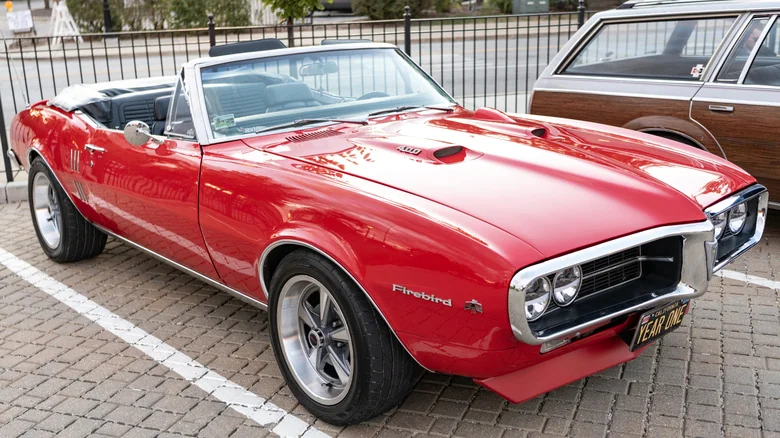
- 1967–1969 Firebird 400 Ram Air models used sealed twin scoops to feed cooler air to the carburetor.
- Noise regulations made the Trans Am shaker an under-hood intake from 1973 through 1981.
- The WS6 Ram Air package restored functional hood induction from 1996 through 2002.
Pontiac's Firebird hood scoops changed from genuine cold-air hardware to mostly decorative styling and back again, depending on the model year. The earliest functional versions appeared on 1967–1969 Firebird 400 Ram Air models, whose twin scoops sealed to the air cleaner and fed cooler outside air to the carburetor.
When the Trans Am debuted in 1969, its functional hood scoop fed the 6.6‑liter (400-cubic-inch) V8, which produced up to 345 horsepower in Ram Air IV specification.
For the second-generation Trans Am, Pontiac switched to a rear-facing shaker with a solenoid-operated flapper door. Under hard acceleration, the door opened to draw air from the high-pressure area at the base of the windshield. The Firebird Formula also offered optional functional cold-air ducts through its twin-snorkel hood.
Noise regulations changed the setup in 1973. Through 1981, the shaker still rocked with the engine, but the scoop was blocked and the engine pulled air from beneath the hood. Pontiac's 1980 turbocharged 4.9‑liter V8 added another nonfunctional hood bulge to provide clearance for the turbocharger.
Functional induction returned briefly on third-generation Trans Am models with the 5.0‑liter V8 from 1982 through 1984. The fourth-generation Firebird's WS6 Ram Air package brought functional hood induction back from 1996 through 2002. Its twin-nostril hood fed a sealed airbox for the 5.7‑liter LT1 V8, which produced 305 horsepower, and later the aluminum LS1, which reached 325 horsepower in its final model years.
Sources & editorial note
Compiled and edited by the Tach Wire editorial desk from open public sources listed below, checked against each source for accuracy. Photos: Photo: Carscoops.
0 comments
Comments stay in this browser. They are not sent to the newsroom.