The short version
- Chevrolet produced 142 409 V8 engines for the 1961 model year and roughly 15,000 in 1962.
- The single-four-barrel version made 380 hp and 420 lb-ft of torque; a twin-carburetor setup reached 409 hp.
- The Beach Boys song "409" helped turn the engine into an early-1960s cultural icon.
Chevrolet's 409-cubic-inch V8 went from a 142-unit introduction for the 1961 model year to roughly 15,000 engines in 1962. The production surge moved the big-block from a low-volume experiment into a widely recognized performance engine.
The 409 grew from Chevrolet's W-series 348, which had debuted in 1958 for trucks and full-size cars. Engineers widened the bore to 4.3125 inches and extended the stroke to 3.50 inches, then fitted a forged-steel crankshaft, forged-steel connecting rods, nodular-iron main caps and a solid-lifter camshaft.
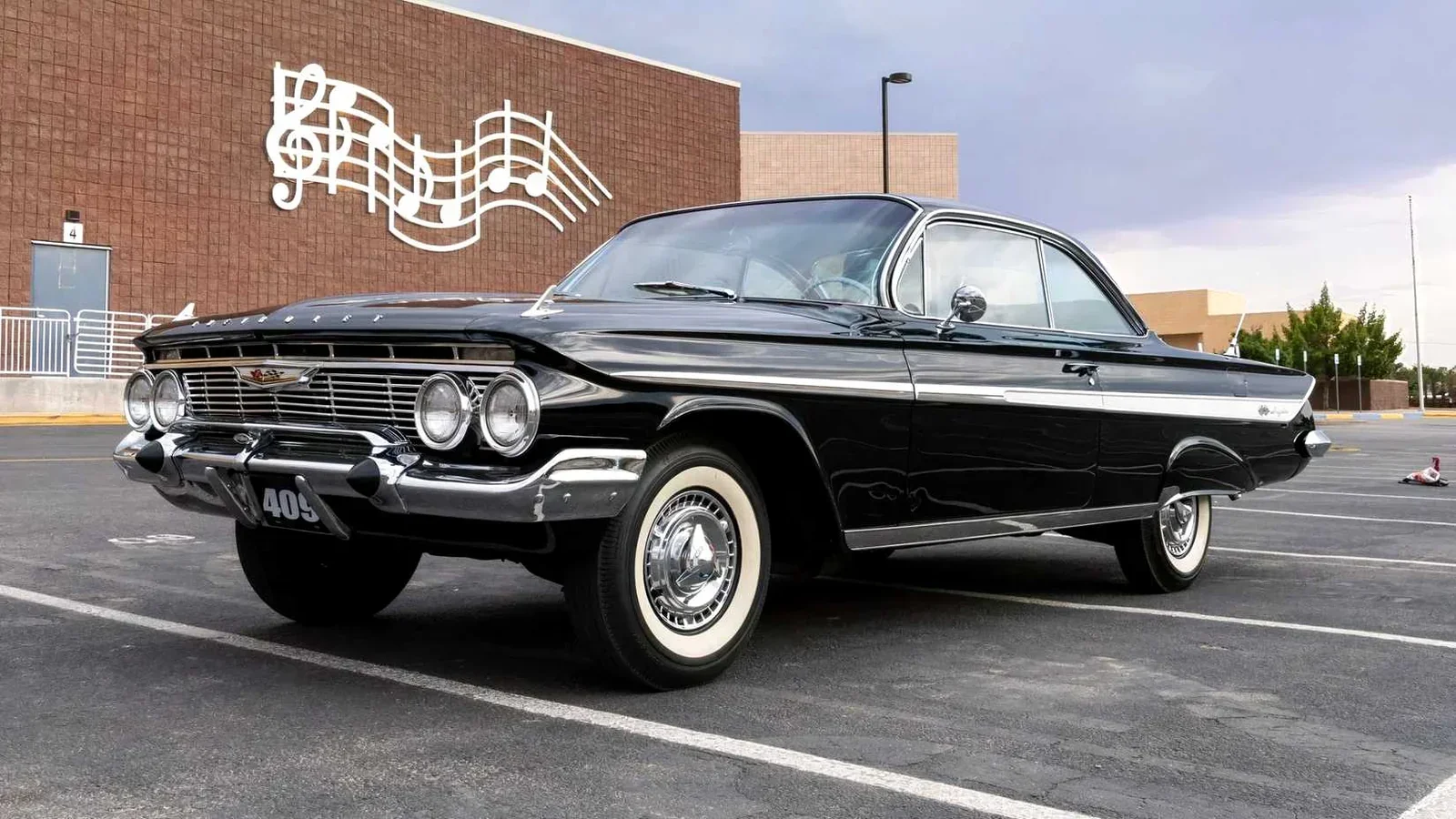
A single Carter four-barrel carburetor gave the engine 380 horsepower and 420 lb-ft of torque in cars including the Impala SS. A less common twin-Carter setup raised output to 409 hp, matching the engine's displacement.
Chevrolet also sold many of the engines as crate units to fleet operators and hot rodders rather than installing them in new cars. Drag racers including Junior Johnson and “Dyno Don” Nicholson helped build the 409's reputation away from public roads.
The Beach Boys' 1960s song “409” gave the V8 its broadest cultural exposure. The opening exhaust recording may not have come from a 409, however; conflicting accounts identify the sound as a smaller 348 or 326.
Sources & editorial note
Compiled and edited by the Tach Wire editorial desk from open public sources listed below, checked against each source for accuracy. Photos: HotCars.
0 comments
Comments stay in this browser. They are not sent to the newsroom.